
.png)
Plastic pollution is a global crisis that - like the accompanying climate crisis - touches every corner on Earth, from Mount Everest to the Marianas Trench. Each year we learn more about the size and nature of plastic pollution, and its enormous costs to our health, to ecosystems and the economy.
The true cost of plastic is at least 10 times higher than the market price and is paid through government spending on waste management, human disease and illness, reduced ecosystem services and climate change (as nearly all plastic is made from fossil fuels), even if it doesn’t show up on financial statements in the short-term.
Plastic packaging is the largest use of plastic in the world, roughly 40%. 95% of that is used once, is often unnecessary and takes thousands of years to break down. Is there any better example of our short-sighted pursuit of efficiency and short-term profit?
Australians have the unfortunate status as the world’s 2nd highest consumer of single-use plastic per person. We use 148kg of plastic per year, more than double since 2000. Our waste management systems can’t cope with this tidal wave of plastic sold to us by large companies, so it ends up in our oceans, on our beaches, in our lakes, rivers and tragically inside our amazing wildlife, and us.
This isn’t due to our failure to bring our reusable shopping bags to the supermarket but the result of corporate and government decisions to focus on recovery (mainly through recycling) over reducing plastic production and use. This trend has endured since the 1980s when American plastic manufacturers launched recycling as a public relations strategy to fend off governments regulating plastic they knew was hard to recycle.
Under Australia’s regulatory framework, companies are responsible for meeting the National Packaging Targets agreed between the Government and industry. This light touch approach has failed, as industry is falling short of its own targets, even after delaying the deadline from 2025 to 2030. As a result, the Labor Government intends to reform national packaging laws within this term of parliament.
But we can’t sit back and wait for governments to do something, however crucial that is. We need more accountability and action from corporate Australia. We need to shift the responsibility away from regular people and onto companies and governments after decades of corporations putting the onus on us.
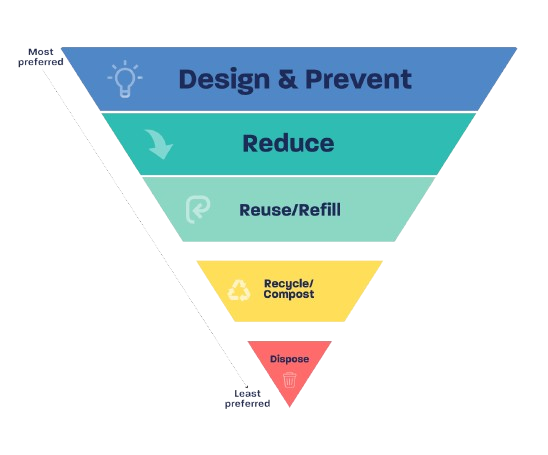
For our latest report, Unpacking Plastic Risk on the ASX, we focused on how 22 large Australian companies in industries that use large amounts of plastic packaging, food, drinks and retail, are addressing this issue in line with the waste hierarchy, which prioritises actions that reduce the environmental impact of plastic.
This is important because while it’s tempting to see recycling as the answer, it should be the last resort when all the other design and business model changes have failed. The waste hierarchy (pictured) shows actions we should prioritise to minimise the environmental impact of plastic.
We also considered companies’ support for ambitious and effective policy to address this problem, given how influential corporations are over our politics.
Our report found that:
The good news is that plastic isn’t the only thing growing. Litigation against companies for harm and greenwashing, shareholder activism targeting big retailers and companies and governments creating real ways to reduce our plastic dependence are all thriving.
US shareholder advocacy organisation, As you Sow, negotiated with nine major consumer goods companies to commit to reduce over 1 million tons of plastic and have already filed six resolutions as US companies in 2026.
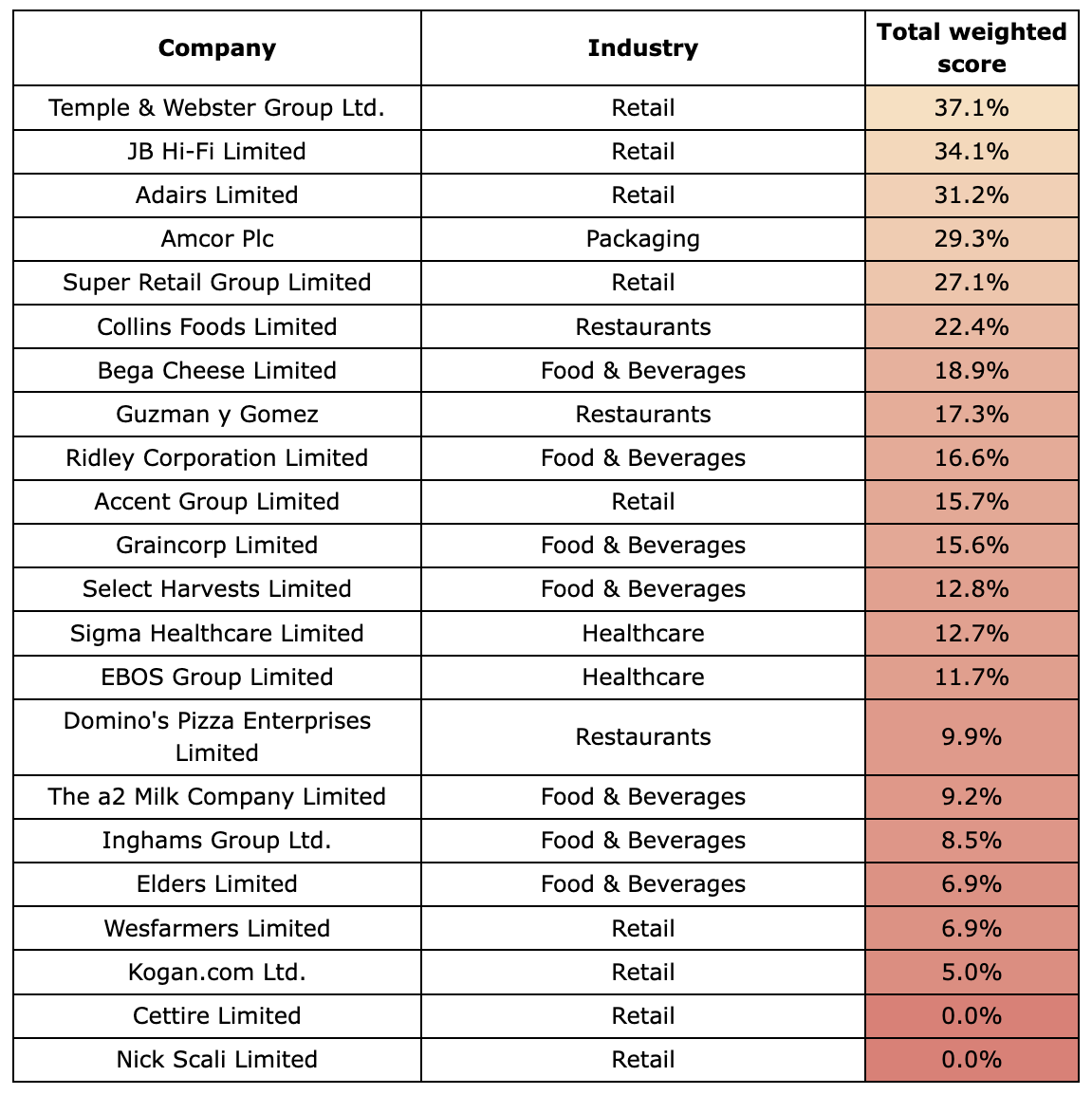
The table below shows how the companies scored in our report based on their approach to eliminating unnecessary plastic packaging.
We’ll speak to the companies in our report to get more information and may escalate our campaign if they don’t meet our expectations for progress.
We’re also targeting Coles and Woolworths over their plastic packaging with our partners, Australian Marine Conservation Society and Future Super.
Join the campaign to stay involved! You can also read the full report Unpacking Plastic Risk on the ASX, as well as AMCS's supermarket plastic audit report Unwrapped 2025.
Start your journey in ethical investing and make a positive impact as a shareholder.