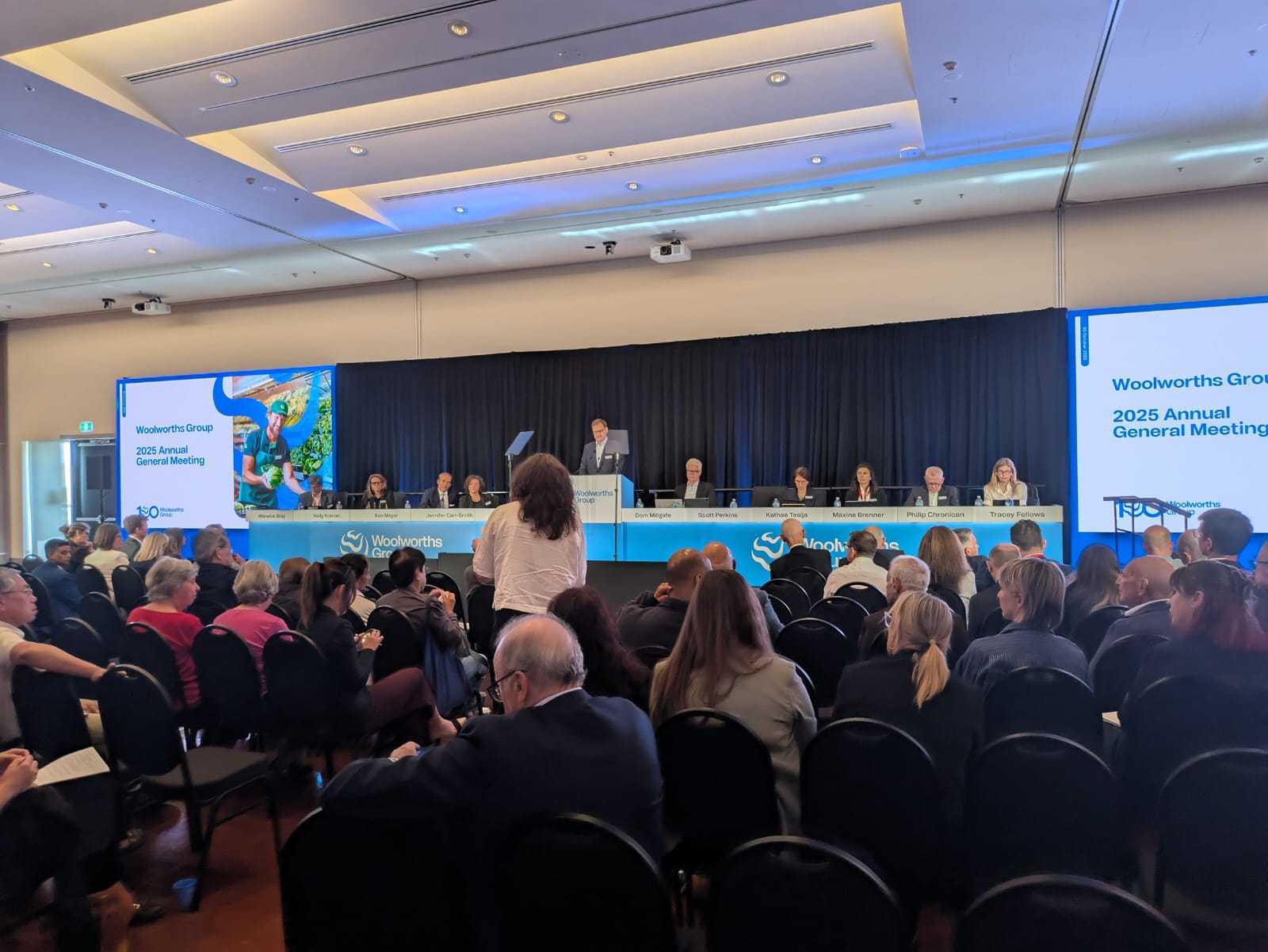
At Woolworths AGM on 29 October in Sydney, SIX CEO Adam Verwey revealed the ethical share trading platform had filed complaints with government regulators, pertaining to Woolworths meeting with their competitor Coles to mitigate backlash on their controversial sourcing of salmon from Macquarie Harbour.
Woolworths has publicly downplayed these meetings with Coles. This conflicts with what senior Woolworths executives have told SIX and their shareholder group over two years of meetings, which took place while the group raised concerns over the threats farmed salmon posed to the endangered Maugean Skate.
The ACCC is the regulator that ensures consumers and businesses are protected by competition between companies, particularly around pricing and supply chains. ASIC regulates the financial system and, among other things, ensures statements made to consumers and shareholders are not misleading.
Coles and Woolworths were both previously sued by the ACCC in the Federal Court for misleading customers with fake discounts. In 2026, the Court found Coles was guilty of breaching consumer law, and is yet to hand down its judgement on Woolworths.
SIX’s complaints are not the first sparked by Woolworths’ mismanagement of environmental harms in their supply chain, or the first time concerns about social harms have been raised.
In September 2025, Woolworths received the world’s first OECD complaint to a retailer over environmental harms, filed by Tasmanian not-for-profit Environment Tasmania. In early 2026, not-for-profit Bob Brown Foundation filed their own ACCC complaint over the labelling of salmon from Macquarie Harbour.
Woolworths was also linked to 150 crimes and concerns in its seafood supply chains, including forced labour, illegal fishing, sanctions evasions, worker deaths and environmental harm, in a recent investigation by investigative journalist not-for-profit Outlaw Ocean Project.
Good morning board members and shareholders.
I’m Adam Verwey, CEO of SIX. We represent around 200 Woolworths shareholders, and co-filed the Macquarie Harbour resolutions that last year was supported by 35% of Woolworths shareholders.
Today SIX has lodged complaints with the ACCC and with ASIC on this matter.
In the Notice of Meeting, the Board told shareholders that claims of improper communications between the Chair and Coles were “unfounded”.
That is not what Woolworths told us. Over many meetings with senior Woolworths executives, Coles came up again and again.
As far back as 31 January 2025, following our globally significant shareholder votes at both the Woolworths and Coles AGMs, we were told Coles was “on the same page”, and that both supermarkets “need to take the same actions, and work in unison”.
On 17 March 2026, we were told Macquarie Harbour salmon had been “an agenda item for talks between the chairs of Woolworths and Coles”. We were also told that this executive had spoken to his counterpart at Coles, and that Woolworths’ action “needs to be aligned with Coles”.
On 1 April 2026, we were told that once its salmon packaging was changed, what Woolworths was doing would “exactly match” Coles.
And on 2 July this year, the Chair himself told me that “all meaningful change requires an industry-wide response”.
That’s more than 15 months of the same message. Nor is it only our word. In April, Coles publicly confirmed that the two chairs had met on at least two occasions.
And what was the outcome? Supply from Macquarie Harbour is unchanged. The only change is to labels. Woolworths now matches Coles exactly.
So either the Board’s statement to shareholders is wrong, or what Woolworths told our shareholder group, repeatedly, over 15 months, was wrong. Both cannot be true.
It matters, because that statement shaped this vote. At least one major proxy adviser relied on it in recommending that institutions support the Chair.
And as far as we can find, no authorisation was ever sought from the ACCC for any collaboration with Coles on salmon. The ACCC’s guidance is clear that collaborations between competitors on supply can carry real legal risk.
Woolworths already carries an extinction risk in its salmon supply chain. The Chair has told us it is a risk the company has chosen to take on. Why would the Board add the risk, or at the very least the perception, of coordinating with its main competitor?
My question to the Chair: before telling shareholders these allegations were unfounded, did the Board know about these meetings with Coles, and did it authorise them?
Geoff Cousins, businessman, former CEO of Optus and Director of Telstra, said:
“The Chair’s request for a 15 year term is unprecedented and unwarranted, particularly from a Chair that has failed to plan for his succession. Furthermore Perkins is heading up a board that a world leading proxy advisor has criticised as lacking experience in the important area of sustainability. I have also questioned the wisdom of his decision to engage with the chair of Coles on important industry matters and continue to do so, particularly in the light of new evidence. These decisions don’t benefit shareholders. They just add additional, unnecessary risk.”
Jess Coughlan, Environment Tasmania’s Senior Skate Campaigner, said:
"Woolworths has demonstrated that they, as a company, can absolutely shift their product sourcing to align with fiscal policies and profit margins - as they did with Tasmanian Beef. It is inexcusable that the same weight cannot be pulled for mitigating an extinction risk. Consumers and shareholders do not want to be complicit in the harm caused by the Tasmanian salmon farming industry - and neither should Woolworths as a company."
Jasmine Labelle Idrissi, Campaigner at Neighbours of Fish Farming
“While Woolworths and Coles appear to be coordinating their response to growing public and shareholder concern, the Maugean skate is still facing an extinction crisis in Macquarie Harbour. This is not a problem that can be solved with a change in packaging or a carefully managed public response. Woolworths and Coles have a responsibility to act on the environmental damage associated with their supply chains, and that means committing to ending their support for salmon farming in Macquarie Harbour. Corporate accountability must mean more than managing reputational risk — it must mean protecting the environment before it is too late.”
Start your journey in ethical investing and make a positive impact as a shareholder.