
🎶 There’ll be shareholders voting
Resolutions for toasting
And executives hoping
You’ll okay their pay
It’s the most wonderful time of the year 🎶
For many of us, the end of the year is full of deadlines, paperwork and gift-wrapping. The SIX team is no exception - when AGM season rolls around, it’s the busiest time of all.
Here’s our rundown on shareholder resolutions, proxies and voting, and why we care so much about these annual meetings.
When the Australian financial year comes to an end, publicly-listed companies get a few months to finish their audits, write their reports, and generally shuffle their paperwork around. Companies could theoretically hold their Annual General Meetings (AGMs) at any time in the five months after their financial year ends - but so many of them end up crammed in between October and December that it’s become unofficially known as AGM season.
Under Australian law, public companies are required to present their annual report at a yearly meeting open to their shareholders - providing investors with transparency and accountability (theoretically). An AGM lets shareholders speak to the company’s board - giving them a rare opportunity to deliver praise, criticism and/or questions straight to the source. And the AGM is when shareholders can cast their vote on resolutions (even if there isn’t a democracy sausage in sight).
If a group of 100 or more shareholders come together, they gain the right to file a shareholder resolution. We work to engage with companies all year round, so not every campaign results in a resolution being lodged - resolutions are a powerful campaign tool to turn up pressure on the company if they are failing to act. But if a shareholder resolution is lodged, it goes onto the official AGM itinerary and must be addressed by the company.
As an added bonus, this gives shareholders the opportunity to ask questions about the issue (and see if they like the answers the company gives).
If you own shares in a company, you’ll receive a Notice of Meeting at least 28 days before an AGM is held. Shareholders have the right to attend (many AGMs have online and in-person options available), the right to ask questions or make comments, and the right to cast a vote on resolutions - or delegate a proxy to vote on their behalf.
A ‘proxy’ means a stand-in to represent you in your absence. Being able to nominate a proxy who could attend and vote on your behalf has been particularly important when AGMs could only be attended in-person.
As more companies offer online voting and live-streamed meetings, shareholder attendance has become much more accessible and the need for appointing proxies has decreased - but it’s your party, and you can have a proxy if you want to.
When you buy shares through SIX for one of our campaigns (or if you sign an agency agreement using shares you already own on another trading platform), it only appoints us as your agent to file a resolution on your behalf - it doesn’t appoint SIX as your proxy, and doesn’t give SIX the power to vote your shares.
Your vote is still all yours! You still have the opportunity to vote on any resolutions at the AGM, which includes any resolutions that SIX and our campaign partners have co-filed for shareholder activism campaigns.
The Notice of Meeting that you receive from the company includes information on each item on the agenda. Agenda items that you’ll see at AGMs usually include both board-endorsed resolutions such as the re-election of directors and endorsement of executive pay, and shareholder resolutions brought forward by ethical investors like SIX and our campaign partners, pushing the company to do better on climate, nature or social justice issues.
The board will generally recommend you vote against shareholder resolutions - but they can’t make you follow their recommendation. Remember that it’s your vote, and your choice!
Some companies are so enormous that the votes of individual shareholders only represent a fraction of the result - so while we appreciate any vote you can cast, targeting large-scale investors is a crucial part of gathering support. This is one of the main reasons the SIX team spends a great deal of time engaging with partner organisations and applying pressure to investment managers. If you’re looking for more ways to help our campaigns, looking for ways to target the biggest investors can have a big impact - your super fund can be a great place to start.
Companies like to loudly point out that a resolution filed by a hundred-odd shareholders represents only a tiny percentage of their investors. But they’ll be quietly paying attention to other numbers too - how many shareholders actually utilised their vote for the first time, how many times a resolution made headlines, how many questions they had to answer.
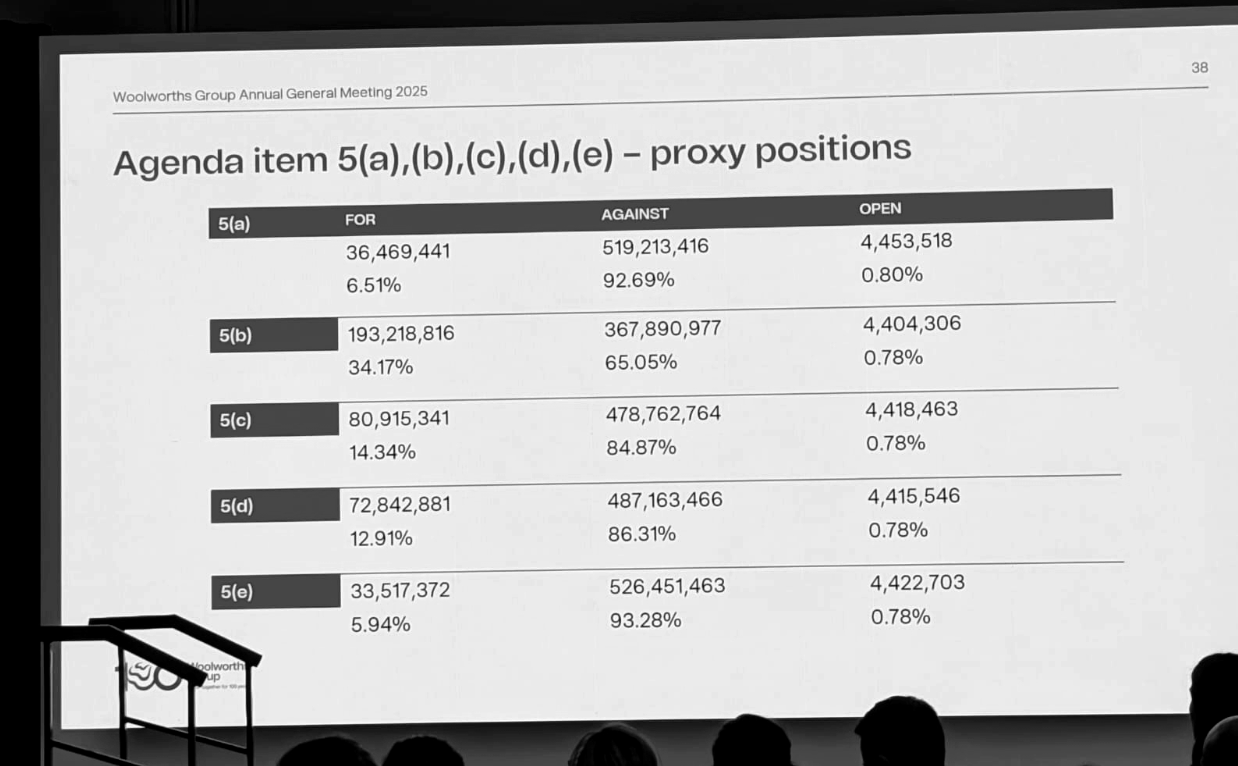
Many votes are cast by institutional shareholders (like fund managers), and a large proportion of individual shareholders don’t actively vote. Even initially gathering 10% of votes in favour of a shareholder resolution can be seen as an encouraging result, especially if it is the first time the issue has been put forward for shareholders to consider.
Globally, shareholder resolutions that achieve support of more than 15% show a remarkably high level of engagement from investors and represent significant pressure on the company. Institutional investors don’t like to vote against a Board’s recommendation (as it’s not considered a polite way to do business), so having investors take the step to publicly disagree with a Board is a big deal. Shareholder activists like SIX and our partners can often file resolutions several years in a row to showcase consistent and rising support.
No company wants to risk the reputational damage of losing a vote to their shareholders - so once they conclude that the resolution will eventually win a majority of the vote, most companies choose to concede to the demands.
If you attend an AGM - virtually or in person - you’ll see one of the SIX team get on the microphone. It’s a key moment for us to ask questions and push the board for answers, holding them to account in front of their shareholders and on the record. Votes cast during the meeting will be added to the advance votes, and the results will be announced.
Also, there’s usually snacks.
Start your journey in ethical investing and make a positive impact as a shareholder.