
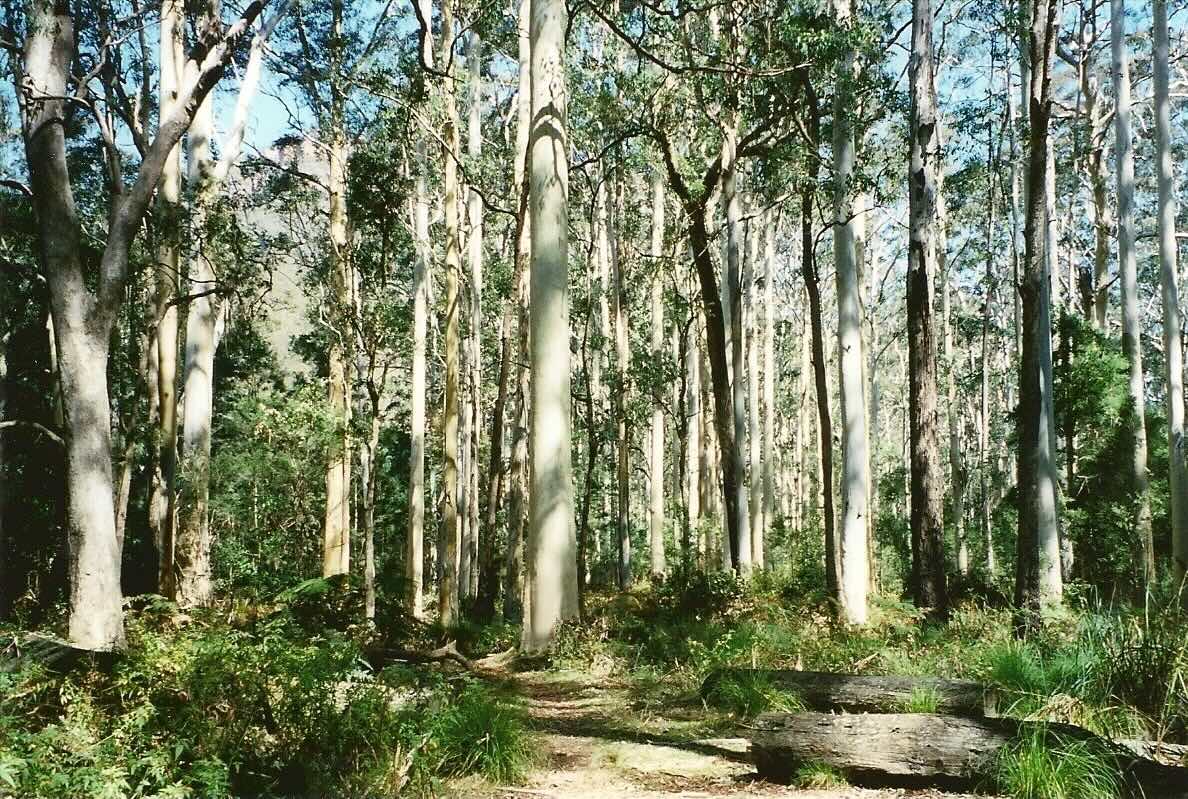
This is Part 2 of a series on how to use your money to maximise forest protection - a major theme in the COP30 climate negotiations recently held in Belém, Brazil, the gateway to the Amazon.
In Part 1 we wrote about using your shareholder power to push the big supermarkets to eliminate deforestation in their supply chains.
This article is about how you can consider (and avoid) deforestation in your longer-term investments.
All information provided is general information only and does not take into account your personal objectives, financial situation or needs. You should consider seeking independent advice before making any decisions to invest.
Let’s say you’re a first time investor who wants to build some wealth, but doesn't want to make money from destroying forests.
You have two options - first, to invest in the harmful companies, and try to change them from the inside.
The second option is to exclude companies that earn money from deforestation from your portfolio.
Our first blog covered how you can do the former via SIX’s shareholder activism; this blog is about how you can exclude the worst offenders from your portfolios.
Investors can use ethical screens to remove companies from their portfolios once they earn enough money from something that doesn't align with your values (say 5% of their total income). This is easy to measure if the product is coal or tobacco, because there’s no ‘good’ and ‘bad’ coal or cigarettes - most people agree they’re extremely harmful and want to phase them out, and companies that sell them usually report their sales volumes.
Whereas people want more logging of tree plantations, which is environmentally better than logging older forests, and a lot of deforestation is legal but highly destructive.
Knowing how much income a company earns from harmful deforestation - legal or illegal - is tricky because supply chains are opaque, and corporates aren’t keen to tell us how much forest destruction they profit off.
So, we start by assessing the economic sector a company is in, knowing that some are higher risk than others. Below shows the key deforestation-linked commodities and the stock market sectors they’re linked to.
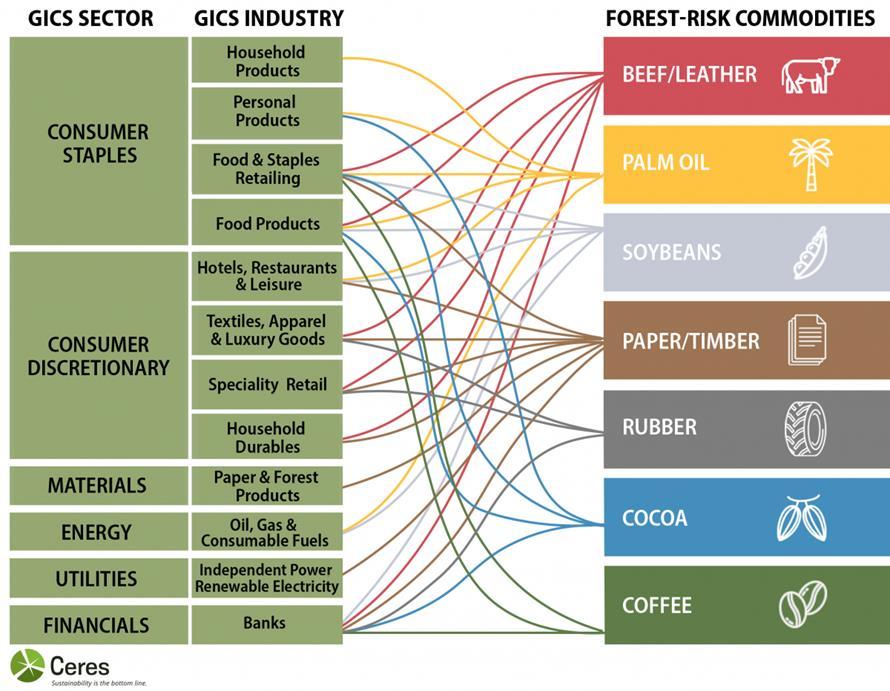
For example, the consumer staples sector is exposed through groceries (like coffee), and household products (like cosmetics that contain palm oil and are wrapped in cardboard packaging made from native forests). But we know Australia’s deforestation is largely driven by beef, sheep and pulp, paper and timber products, mining, and the banks that fund them, so they are the highest risk companies for investors who want to avoid deforestation.
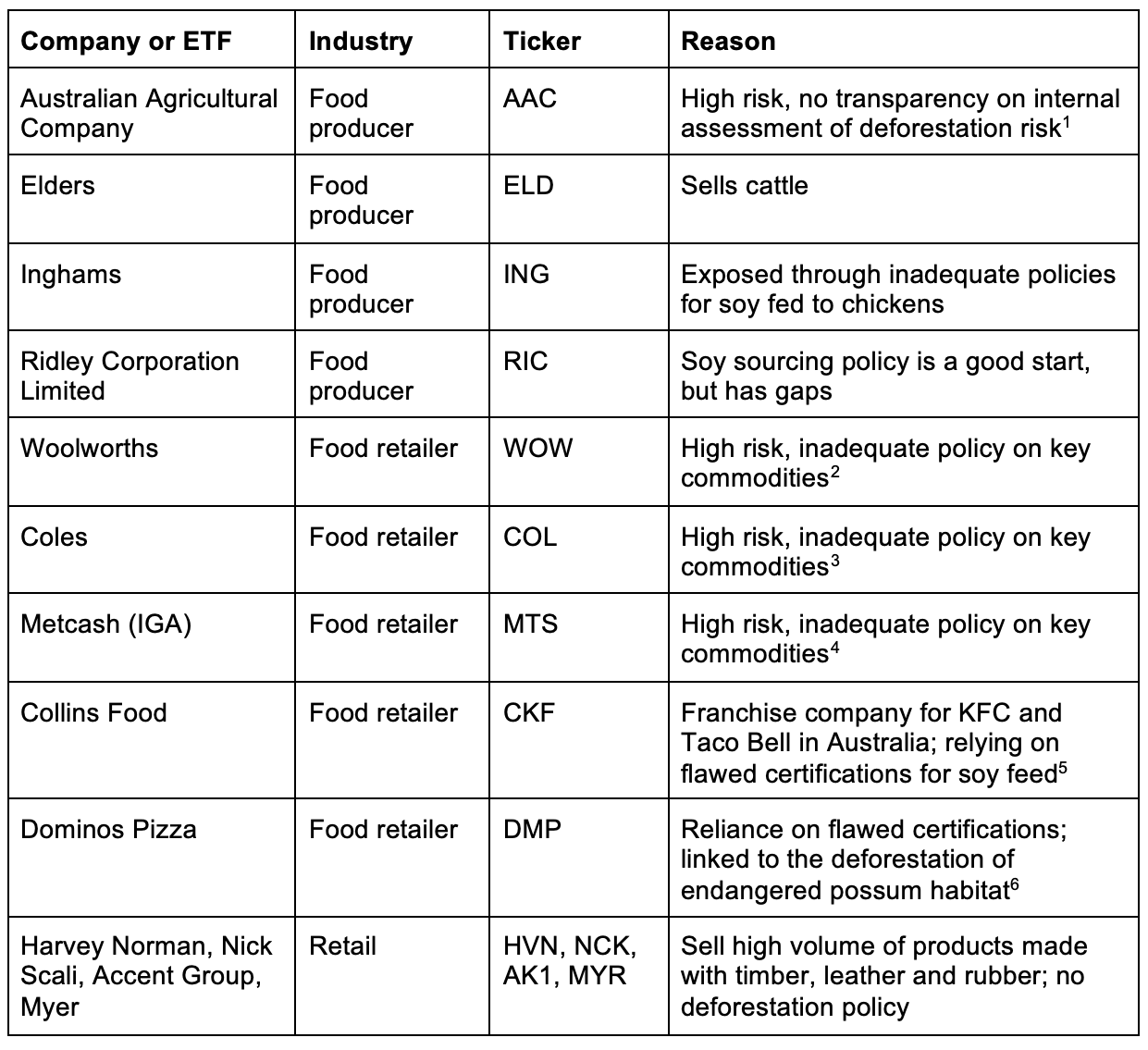
Knowing if the beef on your supermarket shelf is free from deforestation is hard, sometimes even for the supermarkets, because of the low transparency of supply chains - from pasture to processor, saleyard, wholesaler and finally the retailer. But we do know that Woolworths and Coles sell around 5% of all Australian beef, putting both at high risk of contributing to the destruction of Australia’s globally significant forests.
For a company like Australian Agricultural Company (ASX:AAC) - one of Australia’s biggest cattle producers, and probably an influential member of industry groups that don’t acknowledge legal deforestation is a problem in Australia - it’s likely they are earning significant revenue from beef produced on deforested land.
Below is a list of companies that have either been found clearing significant Australian forests, or considered likely contributors due to the origins and volume of the products they sell.
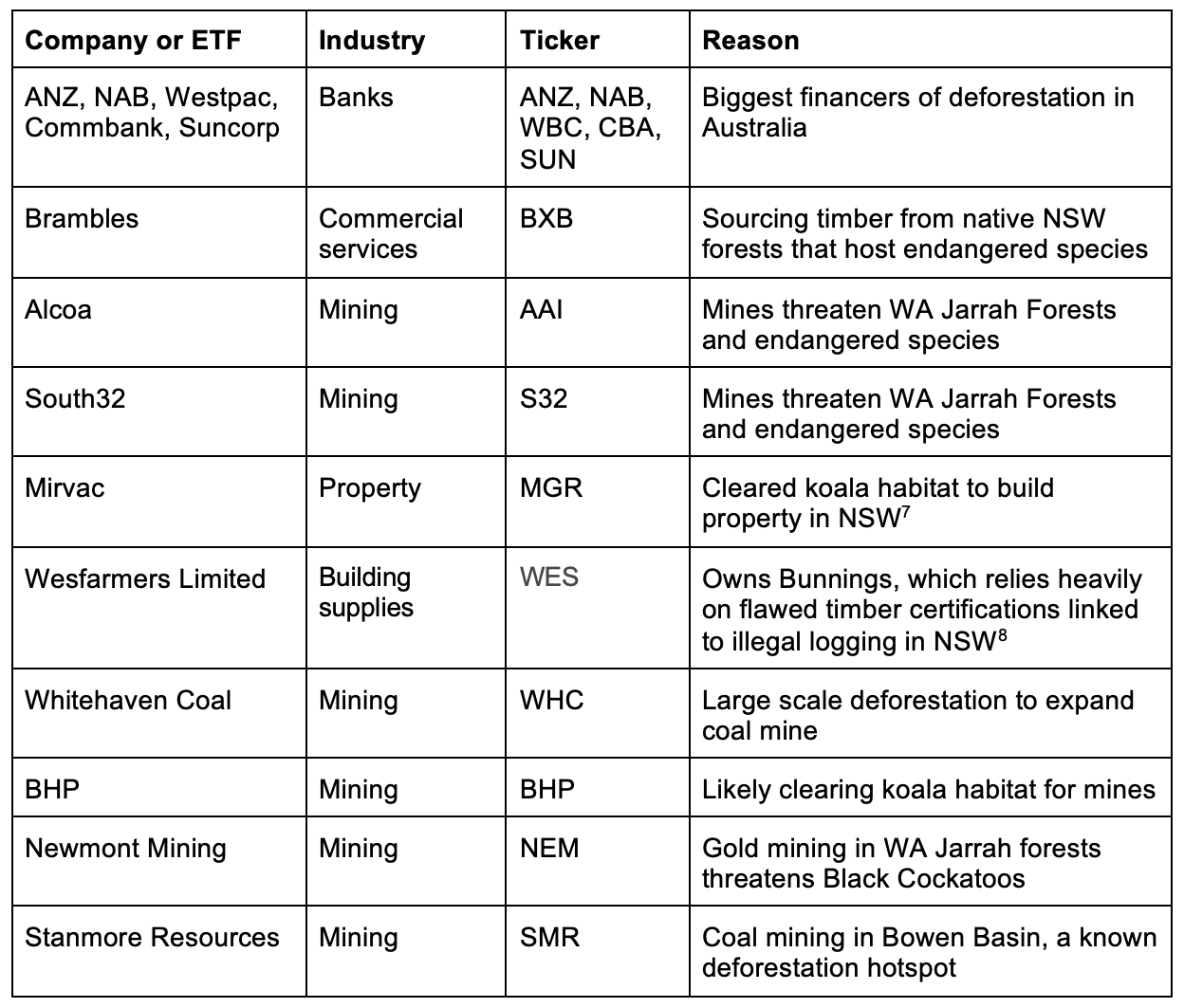
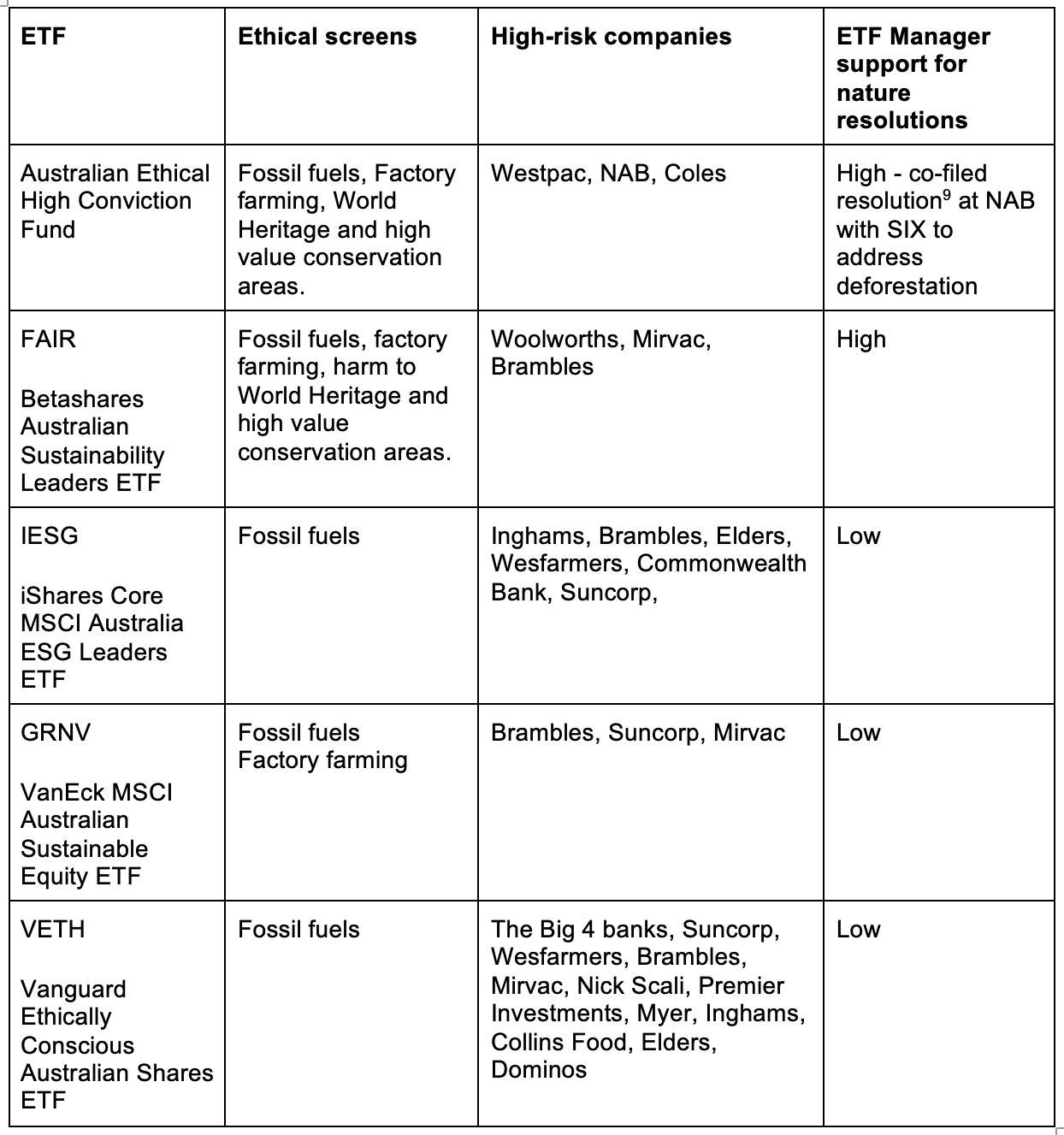
Most ethical or ESG branded ETFs available on the ASX don’t screen out companies because of their links to deforestation (although some may remove companies that are found to deforest valuable habitats under controversy screens, or remove companies that trade in palm oil).
However ETFs that remove high-risk industries like fossil fuels, big banks, and factory farming are going to be less exposed, while those without ethical screens will probably invest in companies that are significant contributors to deforestation.
Another consideration is what the ETF manager does with its ownership of the exposed companies. Do they engage with high-risk companies and vote for shareholder proposals that call on the company to act to eliminate deforestation in their company?
Generally, US funds are the least supportive of shareholder resolutions addressing nature issues at companies; so ETFs provided by Blackrock, Vanguard, State Street, Fidelity, Dimensional and so on will likely vote against action on deforestation. European fund managers tend to be more supportive, while large Australian ones sit in between.
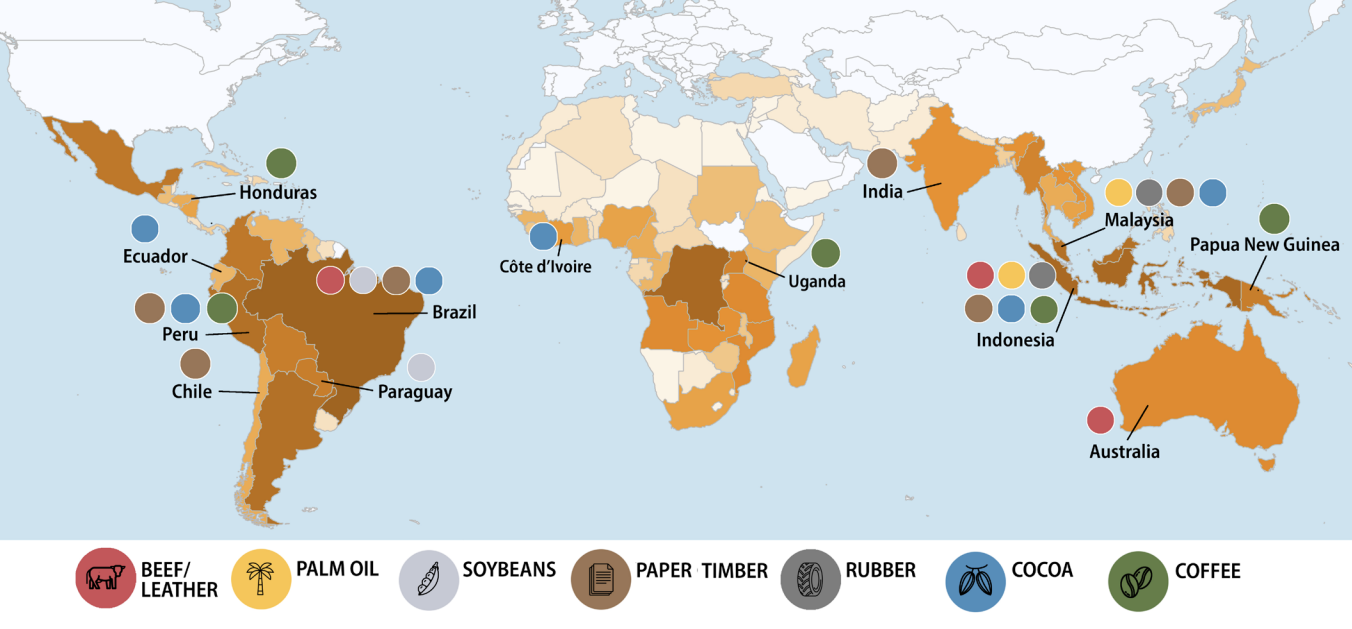
This is much trickier than Australia-only ETFs, because they can effectively be exposed to a slice of the global economy and often follow different indexes (meaning they will have different underlying companies). For example, some international ETFs may invest 50% in US markets, while others may invest 20%.
Our friends at As You Sow ranked hundreds of ETFs for their exposure to deforestation. Unfortunately, it doesn’t cover ASX-listed ETFs.
We use databases provided by NGOs like Forest500 to research companies in ASX-listed international ETFs that are likely driving deforestation.
As a small company, SIX has limited resources but we’re working on ways to help our users who buy international ETFs to assess their deforestation exposure and align their money with their values.
If you can’t wait until then, a rule of thumb is to avoid the most high risk countries, sectors and companies, for example:
Stay tuned on this, and let us know if you have any thoughts! You can email our at team at info@six-invest.com.au, or reach out on Instagram, Linkedin or Facebook.
1 Australian Agricultural Company Limited 2024, Sustainability Report
2 The Wilderness Society, 26 August 2025, Coles steps up: supermarket takes action on deforestation
3 The Wilderness Society, 26 August 2025, Coles steps up: supermarket takes action on deforestation
4 Greenpeace, May 2024, Deforestation crisis on their watch
5 Palm Oil Detectives, 18 June 2022, Certification Schemes Fail to Stop Palm Oil Deforestation.
6 ABC News, 26 June 2025, Woodchips from endangered possum habitat sold to Domino's for woodfired pizza
7 The Guardian, 13 March 2023, Australian Ethical offloads Lendlease shares over development threat to koala population
8 Greenpeace, 2021, Destruction: Certified
9 SIX, 8 October 2025, Australian-first: Banks shareholder resolution on deforestation lodged at NAB
Start your journey in ethical investing and make a positive impact as a shareholder.